

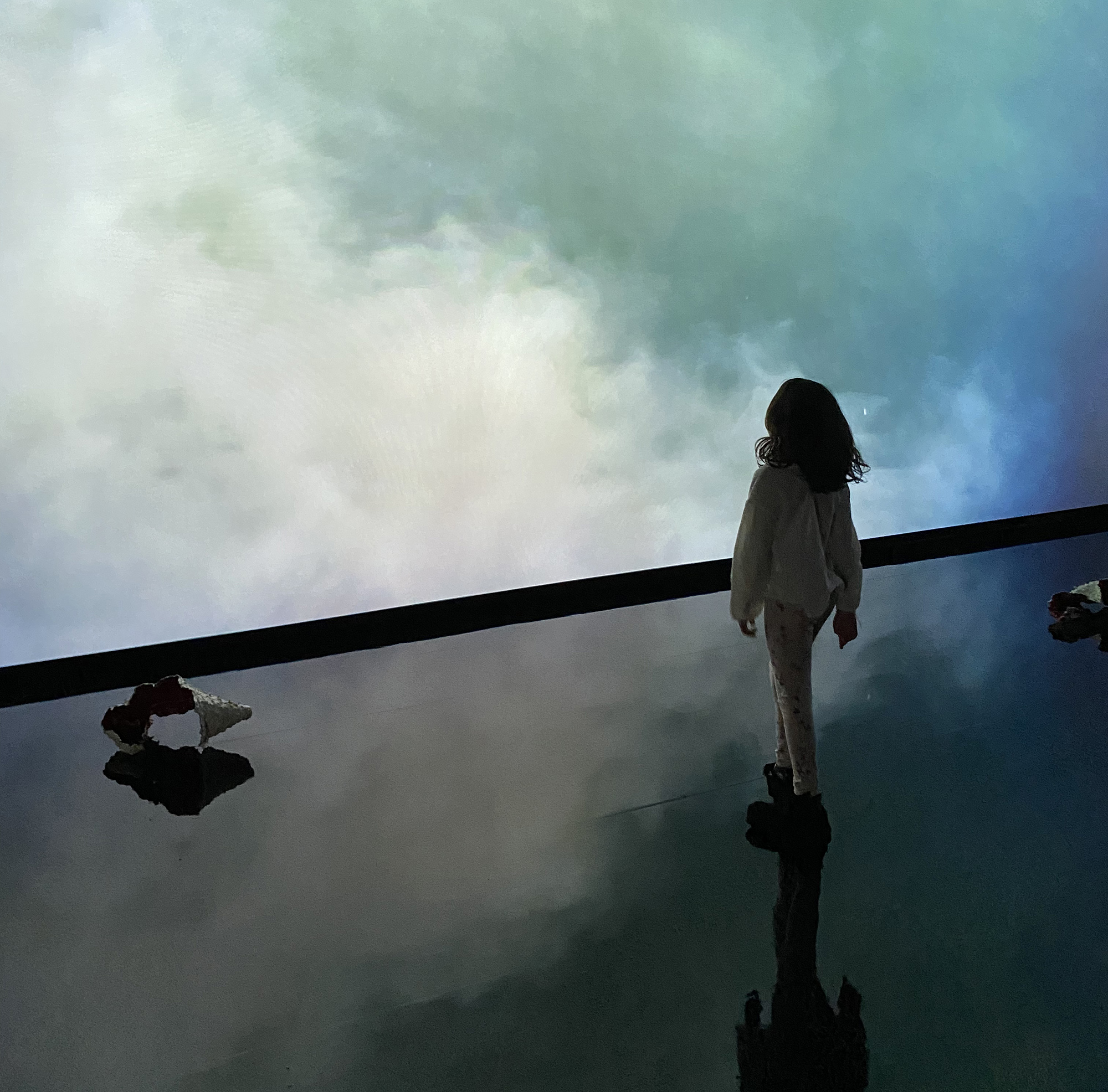
Things We Do for Love is a project commissioned by Arte Abierto to visual artist Erick Meyenberg (CDMX, 1980). It is a video-installation and a large-format sculpture that, both together, exposes the poetics of art and its effect in our perception of reality.


_photo_MarianneWasowska_3.jpg)
_photo_MarianneWasowska_4.jpg)
_photo_MarianneWasowska_5.jpg)
_photo_MarianneWasowska_6.jpg)
The exhibition exemplifies artistic practice complexities and its transformations as resulted from the multiple perspectives and actions intervening in its production. For Arte Abierto it is essential to expose the collaborative nature of art through exhibitions that, such this one, turn out from a process and an exchange of ideas, thoughts and feelings.
Inviting Erick Meyenberg to intervene in our space came up from the interest in bringing us closer to common ideas and concepts, transformed into an intimate reflection through art. Thus, what began as a personal path became a project to recognize how we define our gaze and the meanings that we produced from it.
Lorem ipsum dolor sit amet, consectetur adipiscing elit, sed do eiusmod tempor incididunt ut labore et dolore magna aliqua. Ut enim ad minim veniam, quis nostrud exercitation ullamco laboris nisi ut aliquip ex ea commodo consequat. Duis aute irure dolor in reprehenderit in voluptate velit esse cillum dolore eu fugiat nulla pariatur.
Lorem ipsum dolor sit amet, consectetur adipiscing elit, sed do eiusmod tempor incididunt ut labore et dolore magna aliqua. Ut enim ad minim veniam, quis nostrud exercitation ullamco laboris nisi ut aliquip ex ea commodo consequat. Duis aute irure dolor in reprehenderit in voluptate velit esse cillum dolore eu fugiat nulla pariatur.
Lorem ipsum dolor sit amet, consectetur adipiscing elit, sed do eiusmod tempor incididunt ut labore et dolore magna aliqua. Ut enim ad minim veniam, quis nostrud exercitation ullamco laboris nisi ut aliquip ex ea commodo consequat. Duis aute irure dolor in reprehenderit in voluptate velit esse cillum dolore eu fugiat nulla pariatur.
Lorem ipsum dolor sit amet, consectetur adipiscing elit, sed do eiusmod tempor incididunt ut labore et dolore magna aliqua. Ut enim ad minim veniam, quis nostrud exercitation ullamco laboris nisi ut aliquip ex ea commodo consequat. Duis aute irure dolor in reprehenderit in voluptate velit esse cillum dolore eu fugiat nulla pariatur.

Lorem ipsum dolor sit amet, consectetur adipiscing elit, sed do eiusmod tempor incididunt ut labore et dolore magna aliqua. Ut enim ad minim veniam, quis nostrud exercitation ullamco laboris nisi ut aliquip ex ea commodo consequat. Duis aute irure dolor in reprehenderit in voluptate velit esse cillum dolore eu fugiat nulla pariatur.
Block quote
Ordered list
Unordered list
Bold text
Emphasis
Superscript
Subscript


