
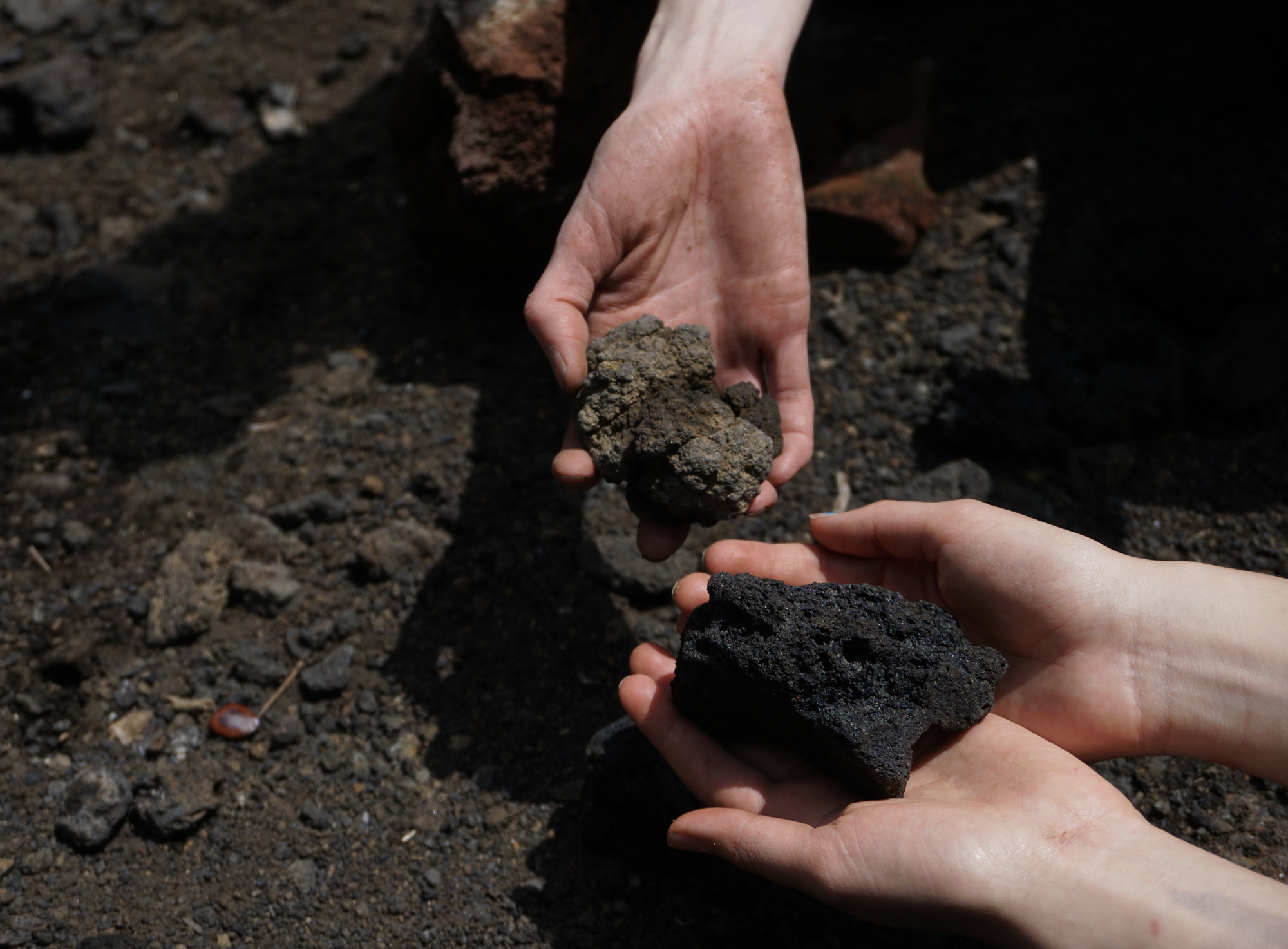

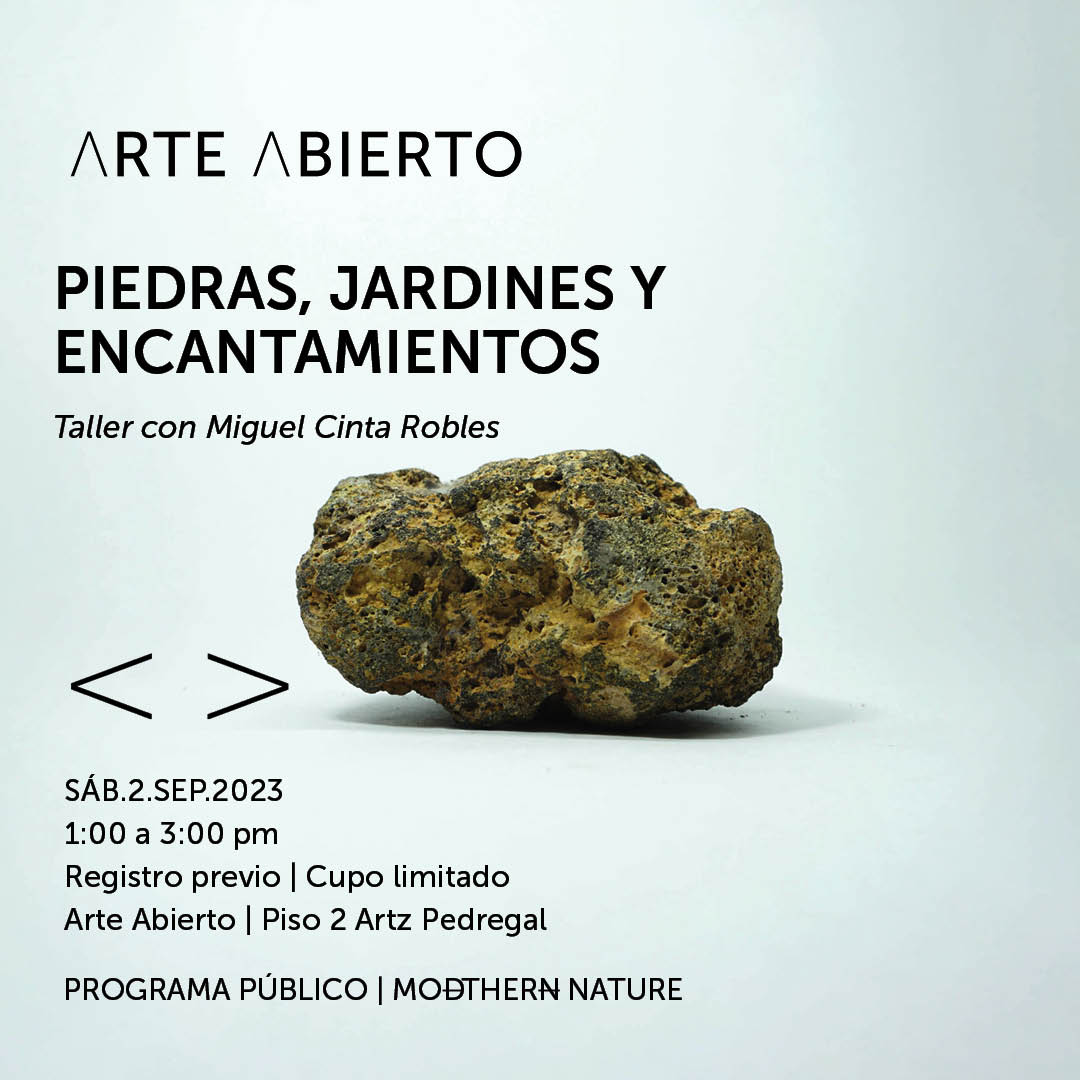
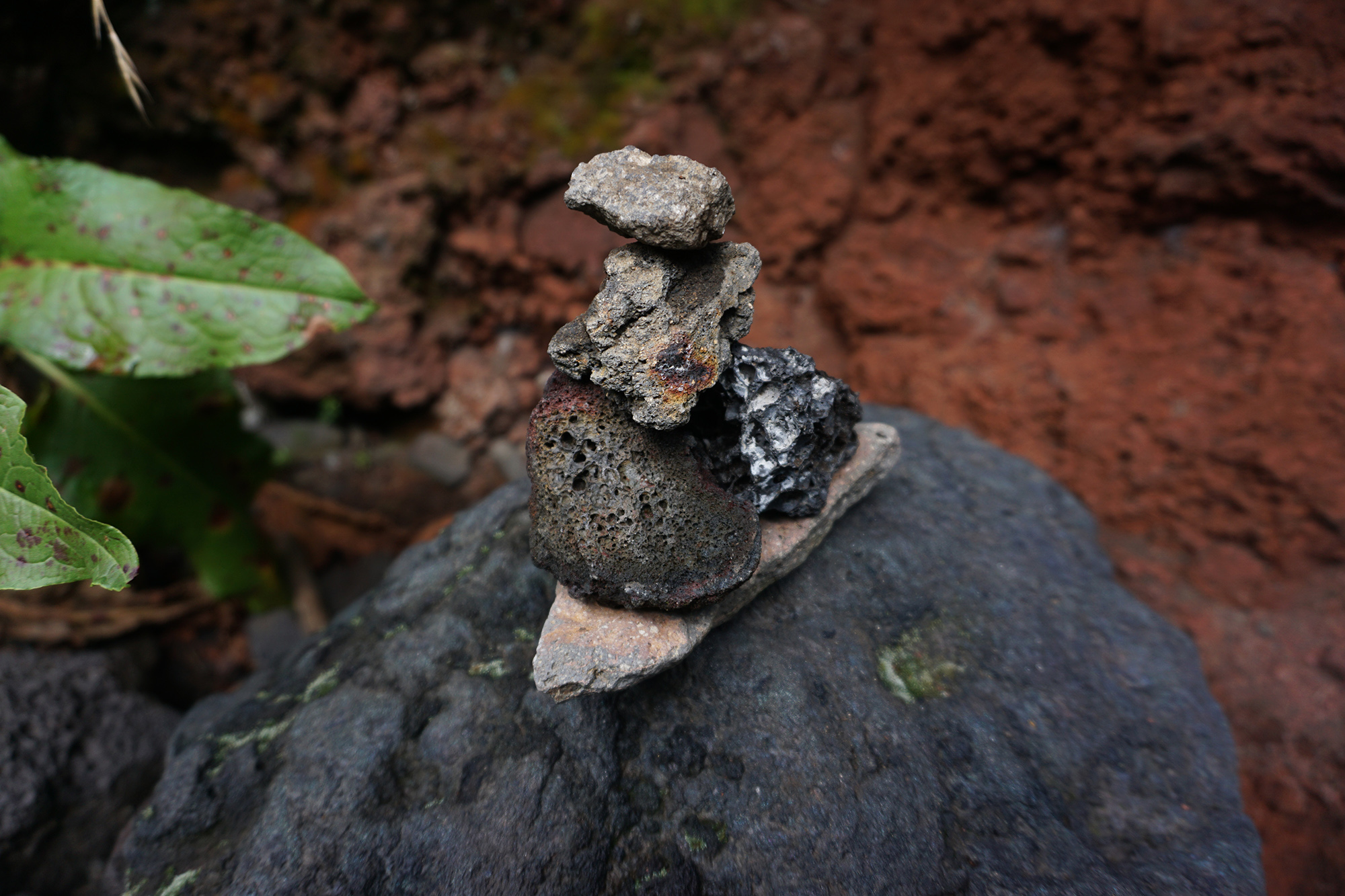
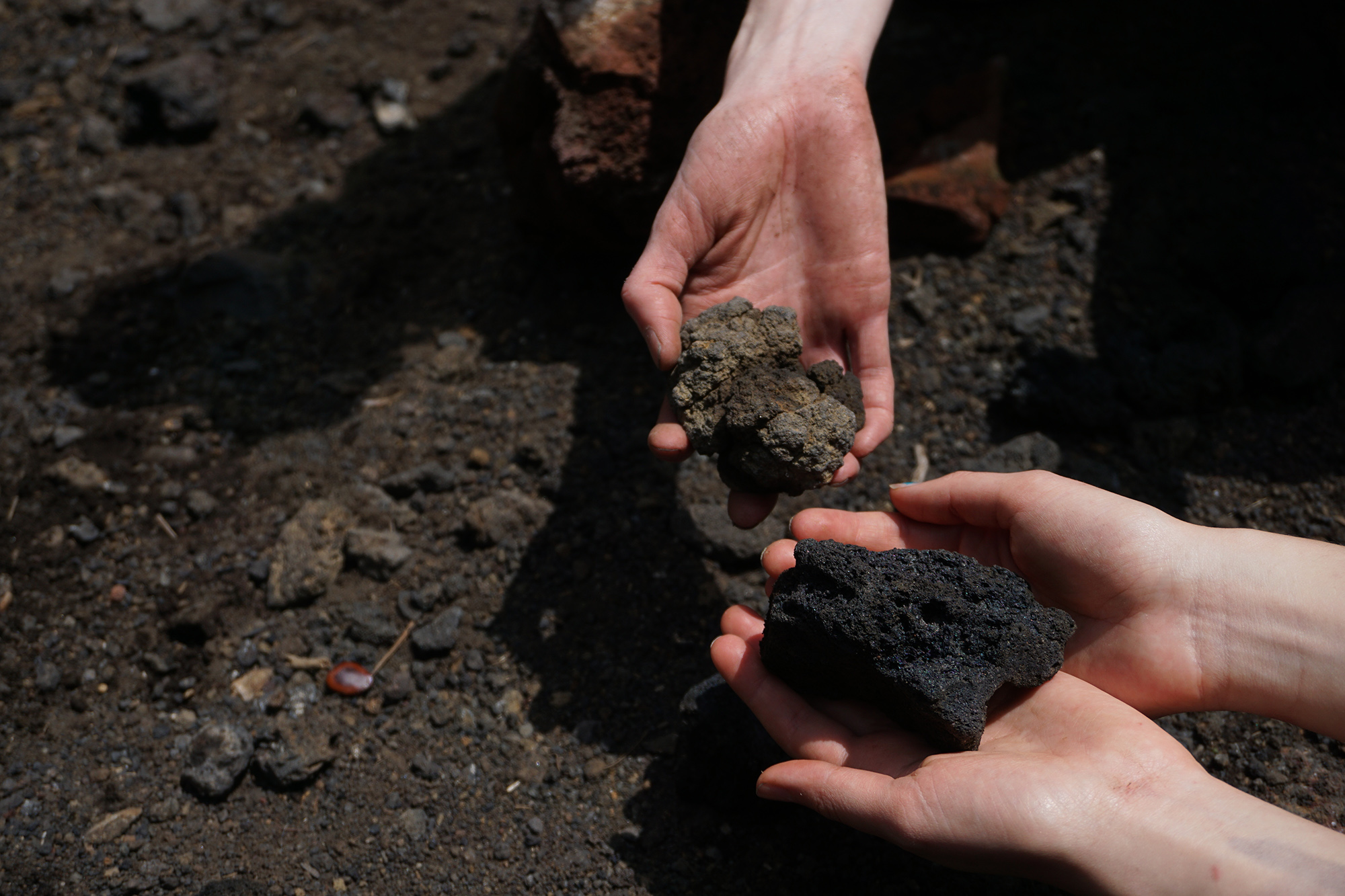
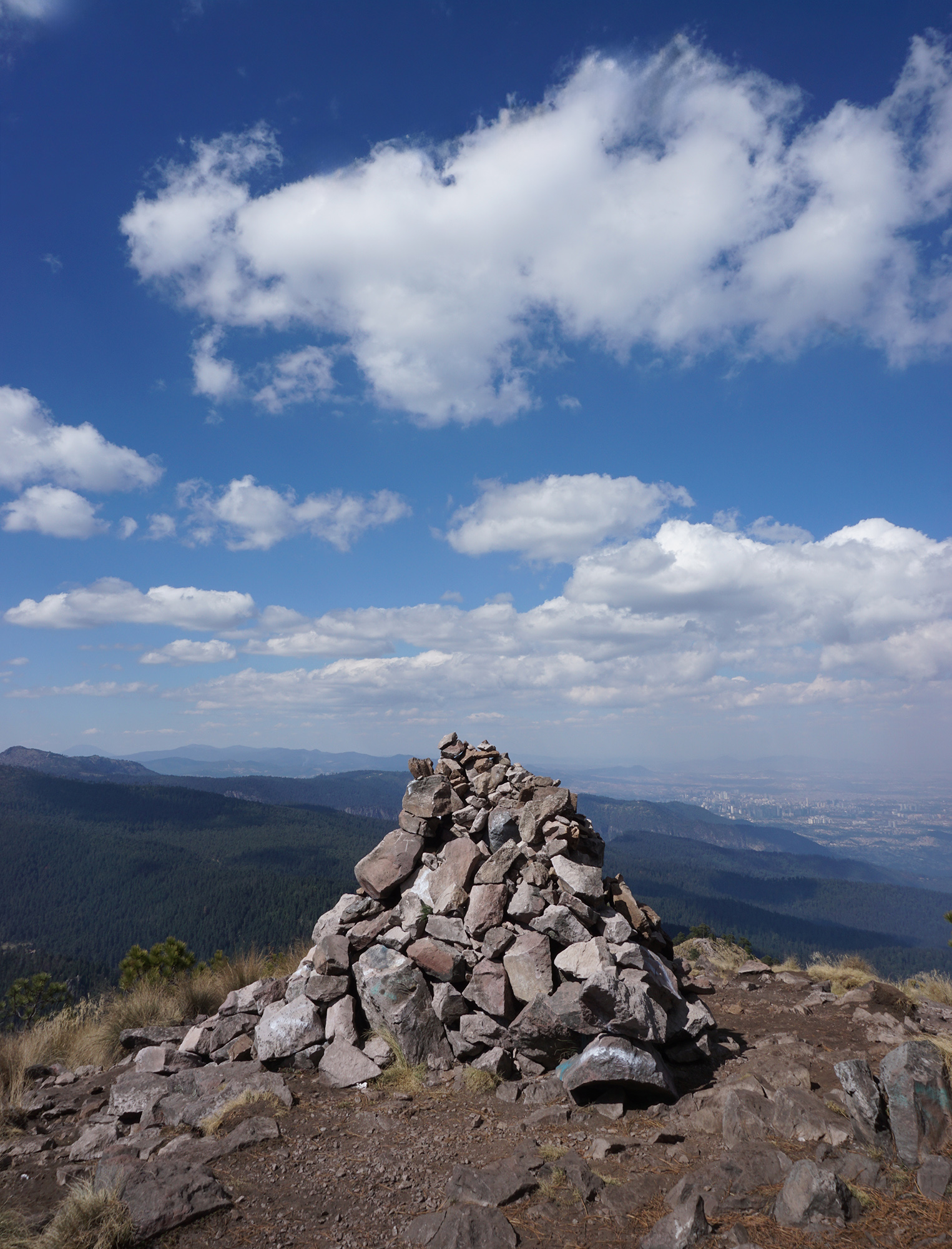
What do stones do in a garden? Maybe they are part of a bench, of a path that connects or of a wall that divides. What do stones do in a forest? They can be fragments of a cave, a shelter for bugs looking for a moment of privacy or a filter for water that crosses a river. What are the stones doing in the city? They are the fragment of a monument, a projectile at a protest or something that gets stuck in a shoe. Observing stones can help us think on other time scales, in dimensions that go beyond us as individuals. At first glance, a stone may seem like a static object, but its formation and movement have shaped the landscapes we inhabit.
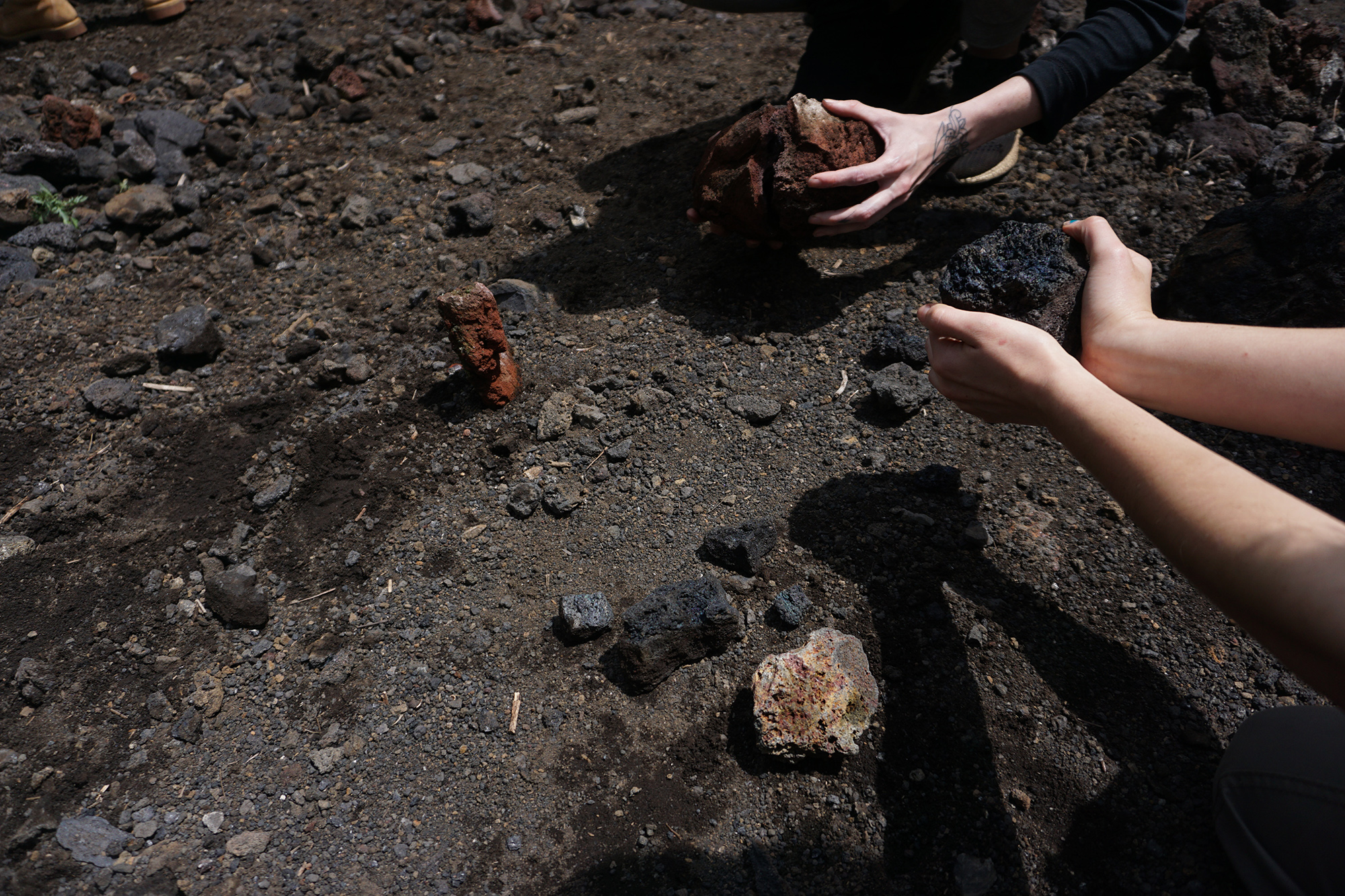
Stones, gardens and enchantments is a reflective workshop for exercising contemplation, a space for questioning and rethinking the garden as a mechanism for containing and classifying what we understand by “nature”. We will reflect on the methods we use to observe and how they are reflected in the way we perceive our spaces and gardens. We will carry out some exploration exercises to reunderstand stones and build other forms of “classification”, imagining that stones can also be spells to attract water, to be linked to lunar cycles, stories, esotericism, to learn to observe what, in our opinion, does not move.
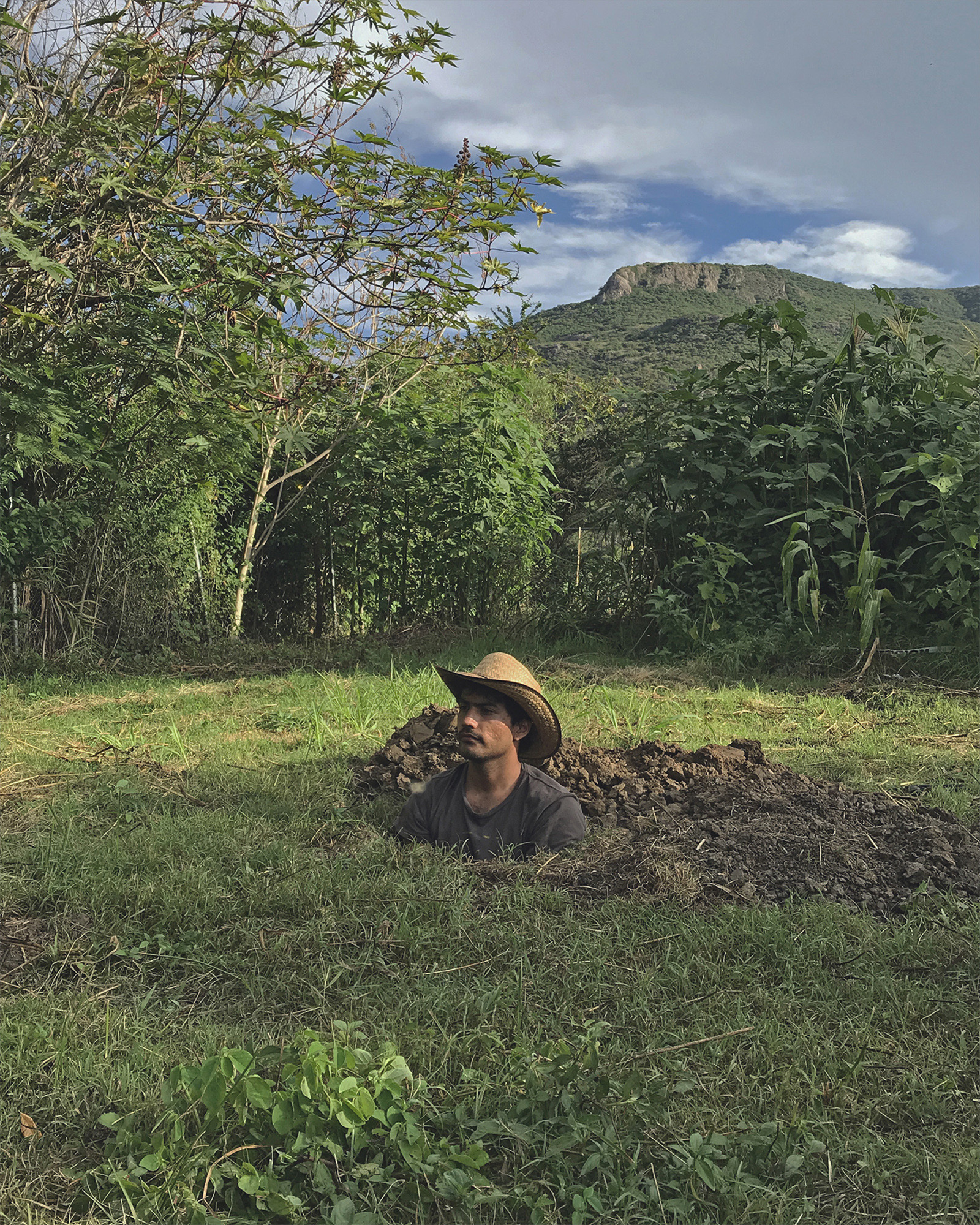
He lives between Oaxaca and Mexico City. He studied at the National University of the Arts of Buenos Aires and studied visual arts at the ENPEG “La Esmeralda” in Mexico City. His interests focus on building models that merge agriculture and sculpture with pedagogical strategies that enable forms of socialization and learning in connection with the land. He is the founder of “Sunday of the Hill”, a project dedicated to producing routes, hikes, workshops and activations in the mountains of Oaxaca and other states of the republic. He is currently collaborating in the syntropic reforestation and eco-construction project “Family Land” where he is dedicated to planting, teaching workshops, building earth furnaces and researching, together with his family, models for achieving food sovereignty and living in interdependence with ecosystems and the community of Tlalixtac de Cabrera.
Instagram: @miguelcintarobles
I grew up in a context that had me surrounded by plants. The plants and the sky stimulated my creativity and filled my childhood with happiness, days during which I recall being in clear syntony with the rhythms of the sun, the rain and the clouds. In my child’s imagination, the house in which I was brought up symbolized a garden and I would take advantage of any sort of free time to be in my grandfather’s garden, where I played on a swing that dangled from the tree that he planted on the day that I was born.
In my memories of childhood, there is no notion of time, I recall only moments. And perhaps it was just like that, in one moment, when the plants became terrestrial and populated the earth 500 million years ago. If the world didn’t have humans on it, plants themselves would occupy every piece of earth, as they did before humans came along. Nevertheless, if the world had only humans on it, without plants or fungi or animals, it would be inconceivable to think of life.
My grandfather was a landscapist who was deeply loving and devoted to his garden, observing the sky with pinpoint accuracy. I was always surprised by his predictions of the weather, a skill which he practiced by observing the color and shape of the clouds. He knew where the rain was coming from and when it would rain –interpreting aromas and the wetness of the air– or why the swallows flew low, a slice of knowledge of his that I still carry with me to this day. When I asked him how he knew it all, he responded that he had learned as a child: “people read the sky and the air.” It was important for us to sit in his garden and contemplate the sky, observe the plants and the ever-changing insects. I liked lying down with my head on his torso, calmly observing the movement and the change of the multiple shapes of the clouds, which could become any landscape, animal or thing.
Now, these memories make me think about the ways in which our links to the technological and scientific have changed our perception in terms of the importance of sowing–in both the literal and the metaphorical sense–and how this has changed the knowledge that these acts hold for the conscience of our relation as living beings with the cultural and ancestral knowledge of plants. The industrialization of nature has pulled us apart from the diversity of species; the devastating destruction of all natural cycles and our connection with the natural world has made us forget the prior sense of belonging, separating us from the contact that implies sowing and of becoming one with the manifestation of life: to sow a common good, to sow empathy, to sow conscience, to sow transmitted knowledge, to sow gratitude, awe and humbleness.
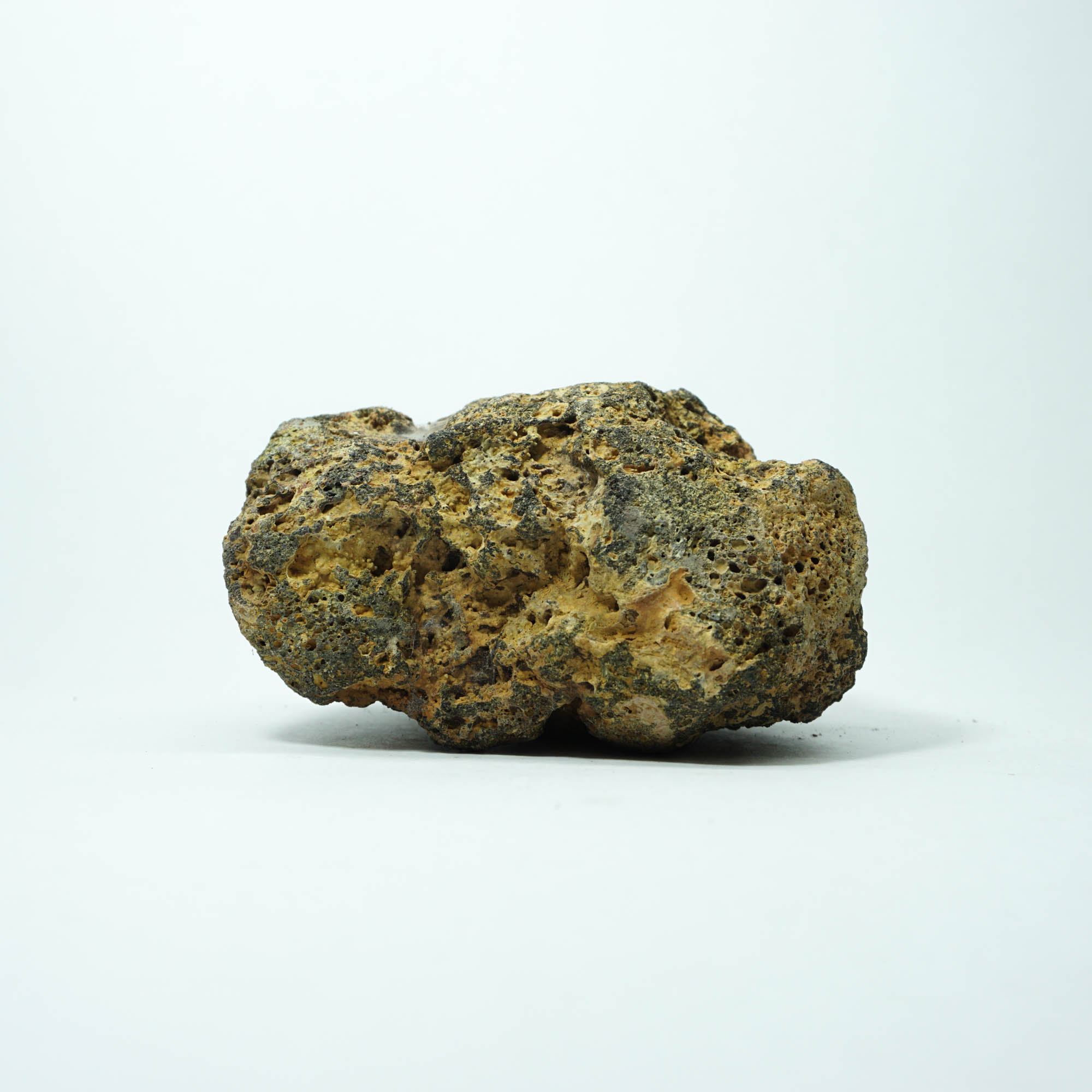
Modthern Nature stems from my interest in stimulating experiences by exploring the concept of transformation, prioritizing the contemplation of subtle and everyday natural happenings through the senses, and generating moments devoted to the fascination and imagination, those that foster the re-enchantment with the natural world and our notion of belonging to it. This is a site-specific installation that connects the gallery space of Arte Abierto to the public space of ARTZ. It is made up of volcanic rock and plants which are endemic to El Pedregal, preserved in collaboration with biologists, botanists, geologists and landscapists, as well as by a hydroponic system with edible and medicinal vegetation which will grow with the aid of artificial illumination. There are also some aspects of Mexican modern architecture and the Venus series, the female characters that emerge from intervened images used in fashion marketing, which are common in any global context. The human presence of these characters is in dialogue with the fascination towards life and ecological catastrophes while they interact with bits of pollen and thawing landscapes that are the result of global warming, which is a by-product of the Anthropocene.
There are different temporalities happening in the exhibition, which are also manifested in El Pedregal, where the relationship between man and nature has resulted in an experience of transformation: from the edification of the Cuicuilco in Mesoamérica, later buried by the eruption of the Xitle Volcano, to the adaptation of 20th century architecture which is integrated to the volcanic landscape, one that represented the practice of modern thought and the power humans had in order to create, remodel, and improve their environment. To explore this area is to walk through a land nourished by memories and encounters, personal ones and those belonging to others; approaching its history and its nature means recognizing its past and future, as well as the transformation of current times contrasted to that which is static and artificial.
Perhaps during my childhood, the everyday nature of my life and the perception of time was similar to the one that transpires in the protected natural reserve of El Pedregal, where the forms of the volcanic rocks scream the strength of the earth, and upon them, sing the flowers, time and the sun. Modthern Nature seeks to procure a time and a space of restauration that can drive us away from the exploitation of nature in the reigning days of global capitalism, in which living beings find themselves in a vulnerable, invaded terrain devastated by centuries of natural resource extraction driven by ideas of development, nationalism and progress which are still happening, simultaneously, outside this gallery space.
We are grateful for the support and advice in carrying out this project to: Eduardo Berumen, Dr. N. Ivalú Cacho González, Arch. Wilfredo Cahuantzi Sigüenza, Biol. Teresa Castaño, Bettina Cetto, Dr. Silke Cram, Eng. Antonio González Guzmán, Eng. Luis Lin, Tonatiuh Martínez, Dr. María Fernanda Martinez-Báez Téllez, Carlota Pacheco, Pablo Villaseñor, Facultad de Ciencias de la Tierra (UNAM), Jardín Botánico (IB-UNAM), Reserva Ecológica del Pedregal de San Ángel (UNAM) and Taller de Paisaje Entorno.
Lorem ipsum dolor sit amet, consectetur adipiscing elit, sed do eiusmod tempor incididunt ut labore et dolore magna aliqua. Ut enim ad minim veniam, quis nostrud exercitation ullamco laboris nisi ut aliquip ex ea commodo consequat. Duis aute irure dolor in reprehenderit in voluptate velit esse cillum dolore eu fugiat nulla pariatur.
Lorem ipsum dolor sit amet, consectetur adipiscing elit, sed do eiusmod tempor incididunt ut labore et dolore magna aliqua. Ut enim ad minim veniam, quis nostrud exercitation ullamco laboris nisi ut aliquip ex ea commodo consequat. Duis aute irure dolor in reprehenderit in voluptate velit esse cillum dolore eu fugiat nulla pariatur.
Lorem ipsum dolor sit amet, consectetur adipiscing elit, sed do eiusmod tempor incididunt ut labore et dolore magna aliqua. Ut enim ad minim veniam, quis nostrud exercitation ullamco laboris nisi ut aliquip ex ea commodo consequat. Duis aute irure dolor in reprehenderit in voluptate velit esse cillum dolore eu fugiat nulla pariatur.
Lorem ipsum dolor sit amet, consectetur adipiscing elit, sed do eiusmod tempor incididunt ut labore et dolore magna aliqua. Ut enim ad minim veniam, quis nostrud exercitation ullamco laboris nisi ut aliquip ex ea commodo consequat. Duis aute irure dolor in reprehenderit in voluptate velit esse cillum dolore eu fugiat nulla pariatur.




Arte Abierto inicia su programa de mediación y comunicación educativa 2022 con una conversación entre la investigadora y escritora Irmgard Emmelhainz y Sebastien Noel de Troika, tomando la exposición No Sound of Water como punto de partida. Abordarán los temas presentes en este proyecto, como el Antropoceno, y harán diferentes lecturas y cuestionamientos (Materialist Realism / Philosophy of Matter / Art as Image).
Irmgard Emmelhainz transmitirá en vivo desde No Sound of Water en Arte Abierto.


