Lorem ipsum dolor sit amet, consectetur adipiscing elit, sed do eiusmod tempor incididunt ut labore et dolore magna aliqua. Ut enim ad minim veniam, quis nostrud exercitation ullamco laboris nisi ut aliquip ex ea commodo consequat. Duis aute irure dolor in reprehenderit in voluptate velit esse cillum dolore eu fugiat nulla pariatur.


No Sound of Water actúa como un paisaje mineral simulado, como una encarnación física de la forma en que la tecnología ha transformado nuestra relación con la naturaleza y la tierra, una vasta llanura de sal que evoca un paisaje lunar que conduce a una cascada mecanizada de sal más grande que el ser humano .
Aún empequeñecido a la distancia, y apoyado por un sonido distante y rápido, la cascada de sal es borrosa, suave como la seda, de un blanco brillante. Al acercarnos, contrariamente a lo que cabría esperar, su apariencia no se aclara en absoluto y nos hace preguntarnos y buscar pistas sobre cuál puede ser su verdadera composición.
Hay tres elementos principales para la instalación: La llanura de sal que conduce hacia la cascada, la cascada en sí y una gran pantalla LED que presenta una animación por computadora de un robot peludo que corta lo que parece ser el último árbol de la Tierra. Los tres elementos son conceptualmente iguales entre sí, entrelazados e interdependientes, formando una unión que comenta la relación voluble entre el ser humano y la máquina, la naturaleza y la tecnología, uniéndose como un trabajo inmersivo que manipula nuestro sentido de escala, sonido, movimiento, olfato y tacto.
La extensión del paisaje y el tiempo que se tarda en cruzarlo para llegar a la cascada juega un papel importante en el despliegue de las diferentes capas de la instalación. Proporciona un cambio gradual para el visitante desde la posición inicial como observador externo a convertirse en parte inherente de la obra al caminar por el llano. Actúa como un filtro mediante el cual la realidad es una simulación y la tecnología es la lente a través de la cual experimentamos e interpretamos otra versión del mundo, aunque igualmente verdadera.
En un extremo del espacio, la vista bidimensional de la cascada se abre y da paso a una experiencia corporal real. El proceso de caminar en sí es tangible a través del ruido, el olfato y el gusto. El aire salado se seca gradualmente a medida que uno se acerca a la cascada, el sonido del fluido granular que se precipita, fluye y choca, se vuelve más fuerte y supera al crujido de la sal bajo sus pies.
El mecanismo mecanismo que se encarga de acarrear la sal desde el nivel del suelo hasta la parte superior de la cascada, solo para subirla nuevamente una vez que ha descendido; como el trabajo de Sísifo, contribuye a la lectura semántica de la cascada de sal, anclando su origen en el tecnologías extractivas artificiales. La máquina en sí ha sido completamente desarrollada y diseñada por Troika en el transcurso de 3 años, y es capaz de recircular hasta 30.000 kg de sal por hora.
La cascada de sal se coloca en oposición diametral con otra máquina, una pantalla LED medio enterrada en la sal.
Tanto la materialidad como el propósito de estas dos máquinas se completan: la cascada de sal realiza el movimiento de la sal, haciendo que la materia cristalina se mueva, mientras que la pantalla y su LED de sales arrojan luz sobre la escena.
El título No Sound of Water hace referencia al poema "Wasteland" de T. S. Eliot.
Escrito después de la Primera Guerra Mundial, el poema de Eliot describe la desorganización de la sociedad y el papel de la tecnología y la industrialización en la civilización occidental.
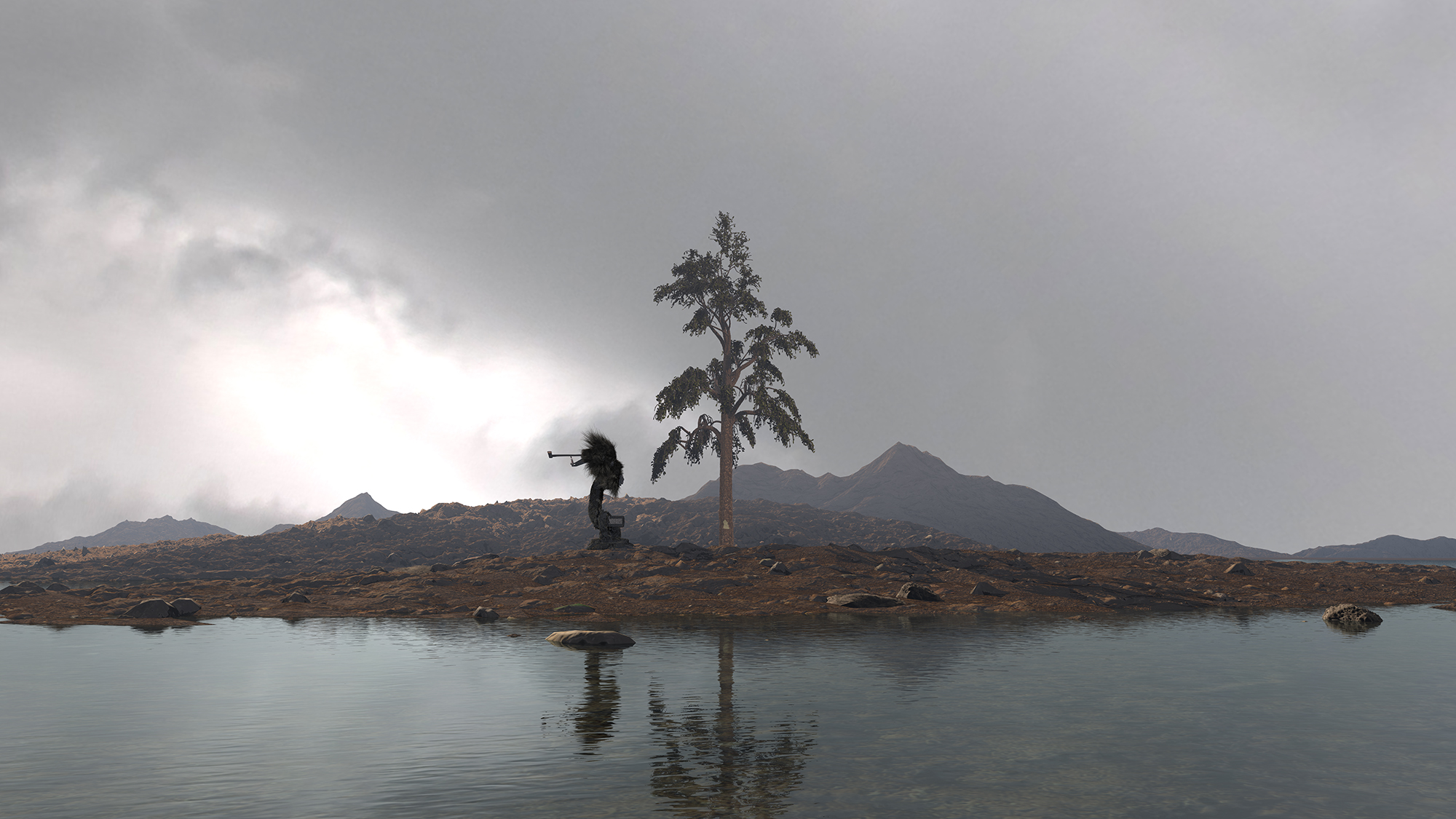
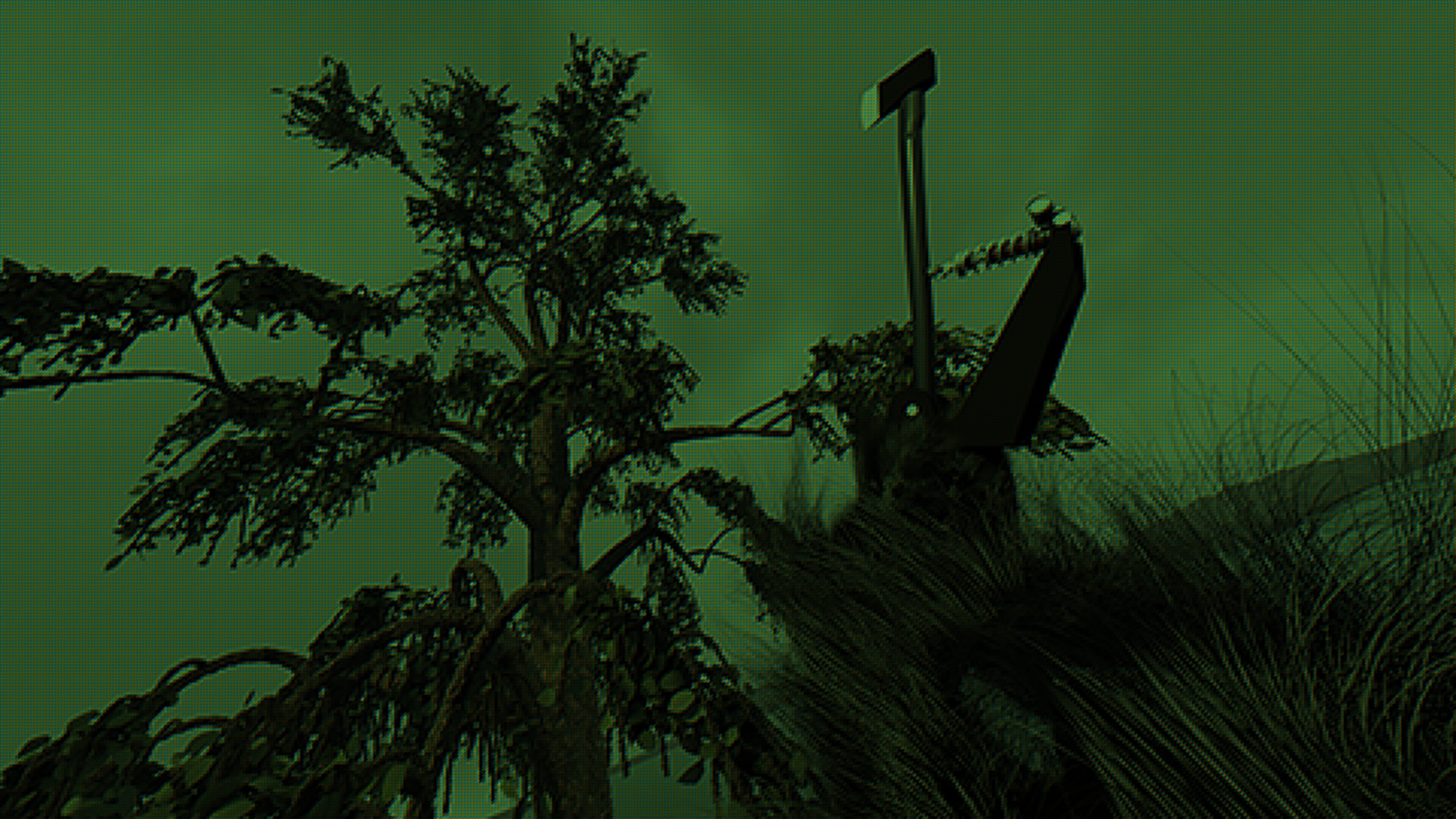
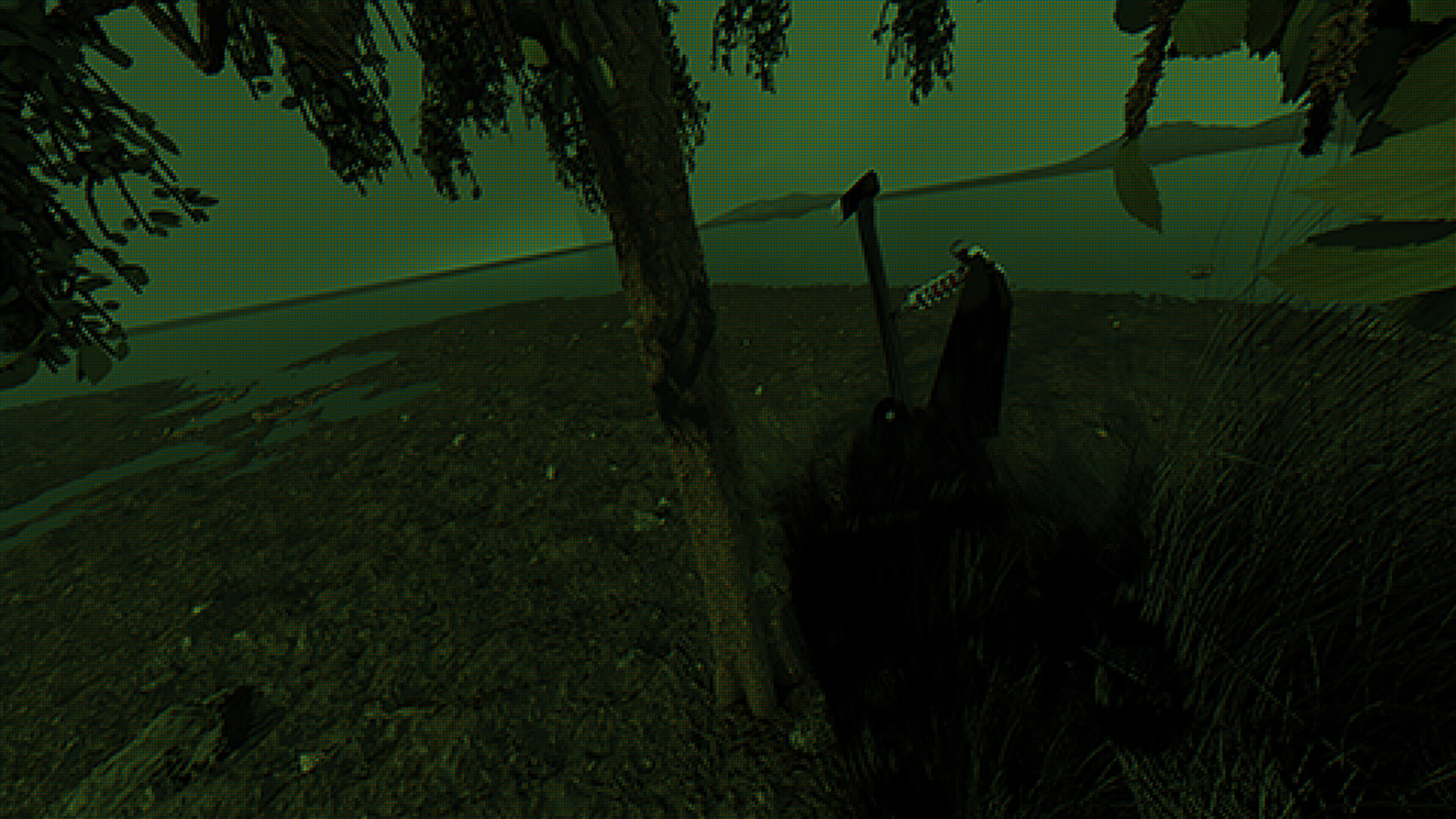
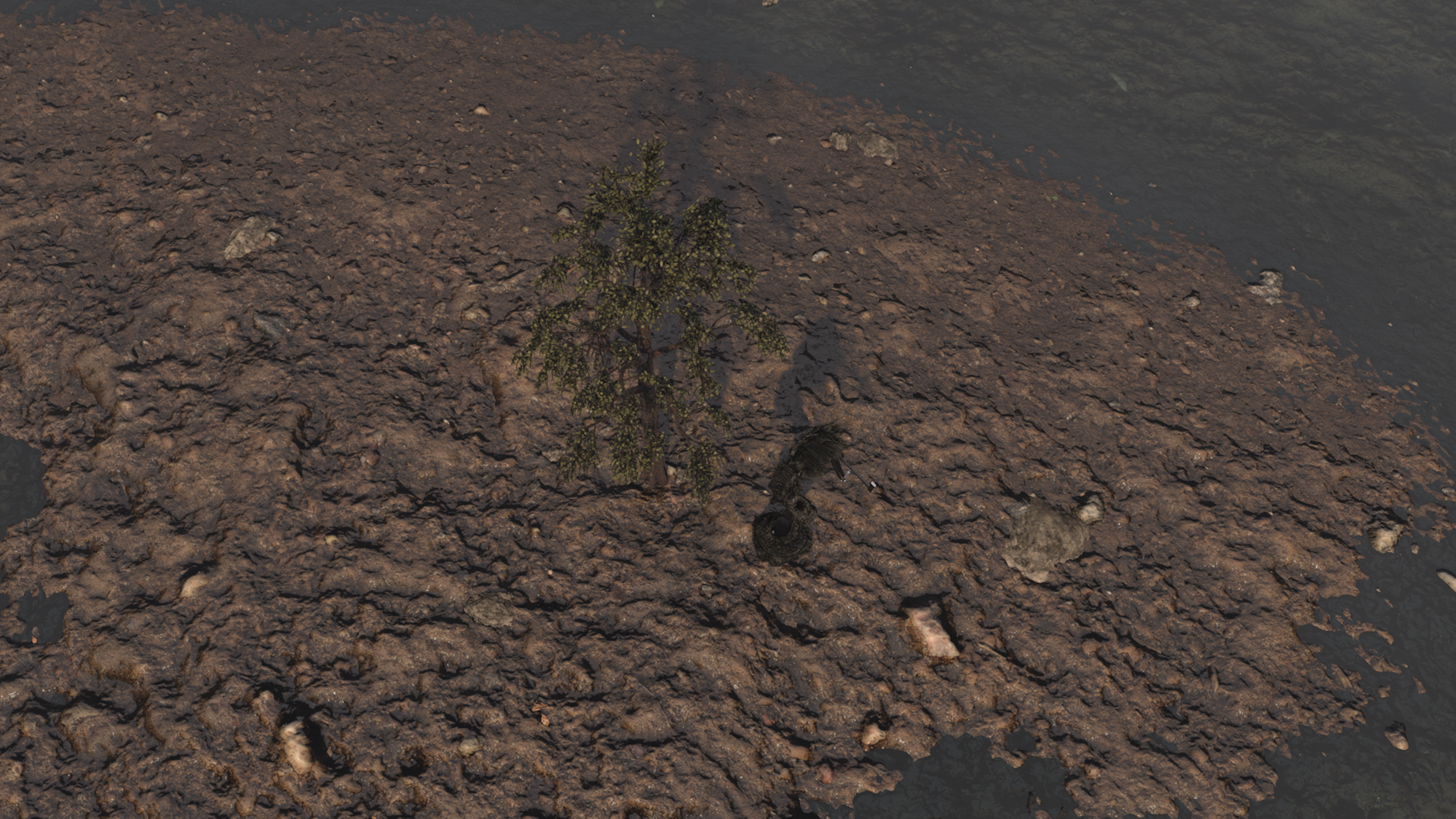
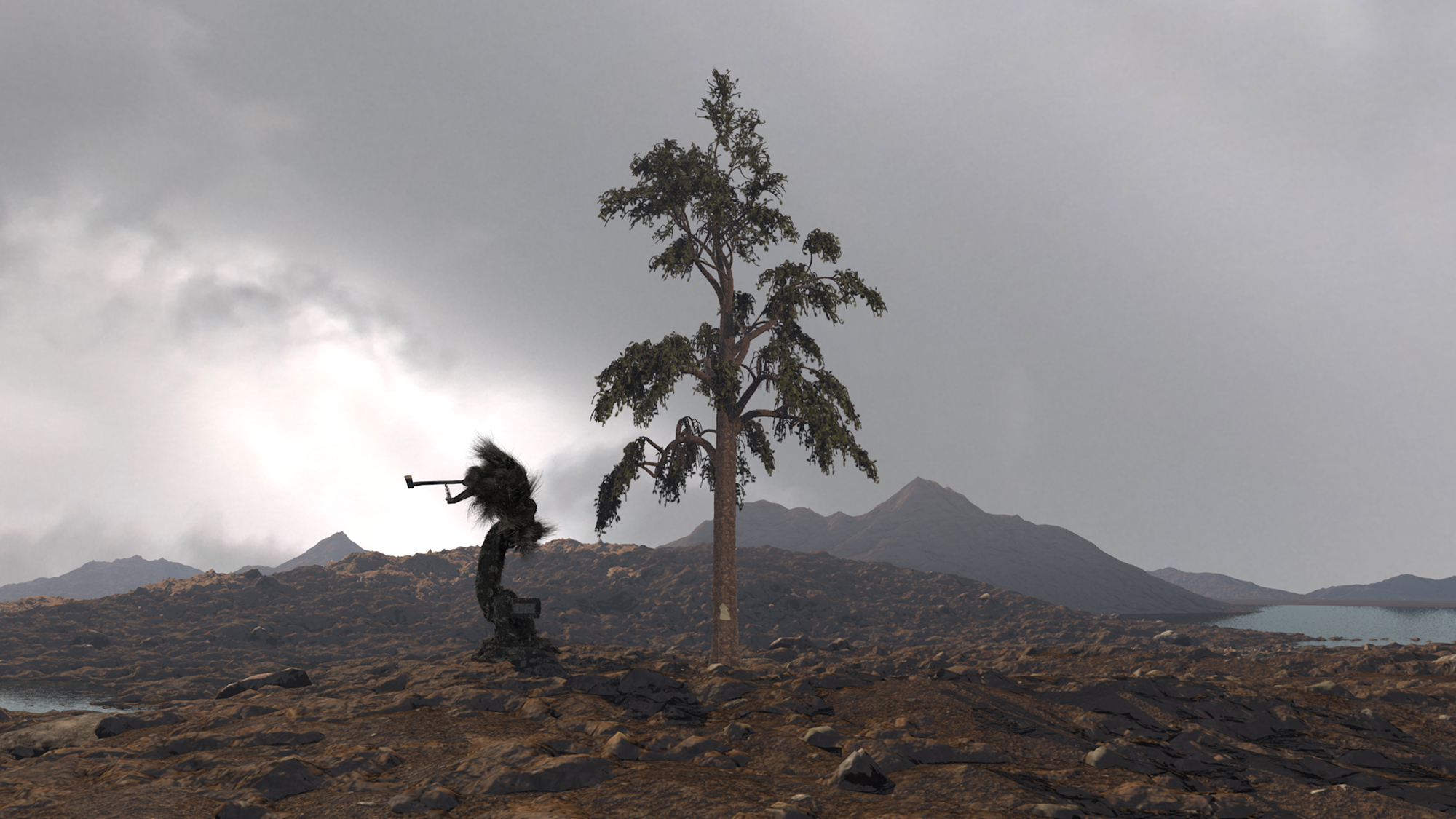
Terminal Beach is a 4 min long computer animation film for which we used custom motion capture to record the movements of a person swinging an axe and cutting down a tree.
This motion was transferred to a production robot arm, dressed in long dark hair. The result makes the robot look uncannily animalistic or even human, reminding us of a large ape-like creature chopping down what we thought of as the last tree on Earth.
In the futuristic end-time scenario, the robot brings to an end what mankind began long ago – the continuous destruction of our planet. In a world facing the ravages of climate change, with people on one extreme feeling fear and on the other plain apathy, the piece triggers new complex emotional responses. The actions of an almost comical yet aggressive robot contributes to the feeling of desolation evoked by the landscape in a dystopian world.
We chose the title Terminal Beach, both in reference to JG Ballard and as we feel it is more evocative, while pointing at the logical conclusion of the act presented in the work.
The work was inspired by the re-reading of a text by Theodore John Kaczynski, “Industrial Society and its Future” - the Unabomber’s manifesto. While the text is rightfully highly controversial for its rightwing positions, its wide ranging simplifications, and most importantly for being the motivation behind Kaczynski’s numerous act of terrorism, it does propose a pretty irrefutable demonstration of the dangers of AI, showing that humanity is on the course of becoming subservient to its own creation, and relegated to a life of meaningless idleness (paragraphs 171-179). Little known is that Kaczynski was also the youngest assistant professor of mathematics ever nominated at Berkeley University, a man noted for his atypical analytical intelligence.
"Troika were struck by what they see as an explicit link between these ideas and the quest for efficiency and profit of late capitalism, the rise of automation, and the ecological crisis we are facing, whilst our obsession for industrial growth will only accelerate the destruction of our environment. Hence the desolation and the central figure of a robot, which may one day replace human labour because it is conveniently cheap and emotionless. This blending of the real and unreal takes a further twist towards the uncanny with the British based artistic trio Troika’s video piece Terminal Beach (2020). An industrial Kuka robot covered in fur chops down the last tree a desolate landscape with an axe.
The fur accentuates its movements and makes the violent action of the robot seem comical and alluring. It is uncanny in Freud's analysis of heimlich and unheimlich - a liminal piece that is familiar yet sinister at the same time. This piece evokes very complex and new emotions that yet are to have definition as the viewer watches the robot's relentless and repetitive actions, which are leading to the destruction of nature and environment.
The further twist in the tale is that the robot that was animated for this piece was trained to do this by the artists. The robot is merely following orders-given by humans whose actions have contributed to the climate crisis we are now in".
Ariane Koek



_1.jpg)
_1.jpg)
_1.jpg)


